Brooke Steele

Task One
To broaden my understanding of game development, I will explore how leading practitioners approach their craft. For this task, I will complete four mini case studies, each focused on a different specialist area: Games Design (Level Design), 3D Art and Animation, 2D Art and Animation, and Programming.
I will research one professional or studio per specialism, examining their creative intentions, use of visual and audio language, tools, and design processes. I will also consider how they present their work ethically.
By examining these practitioners, I will reflect on how their methods and philosophies can influence and improve my own skills. This will help me understand industry standards and inspire me to develop my creative practice in ways that are both thoughtful and effective.

-2D- Practitioners
Yoishiyuki Momose
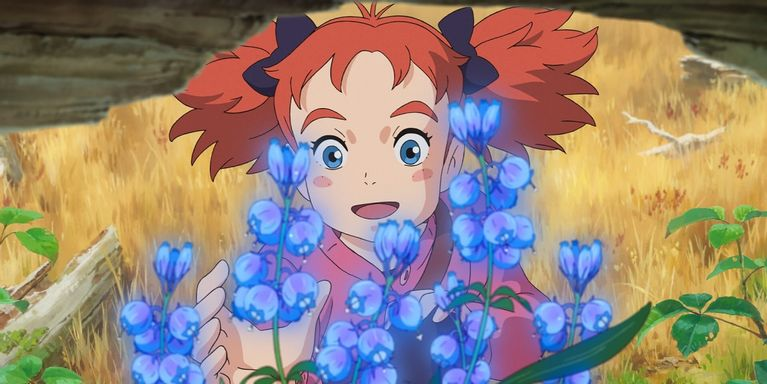
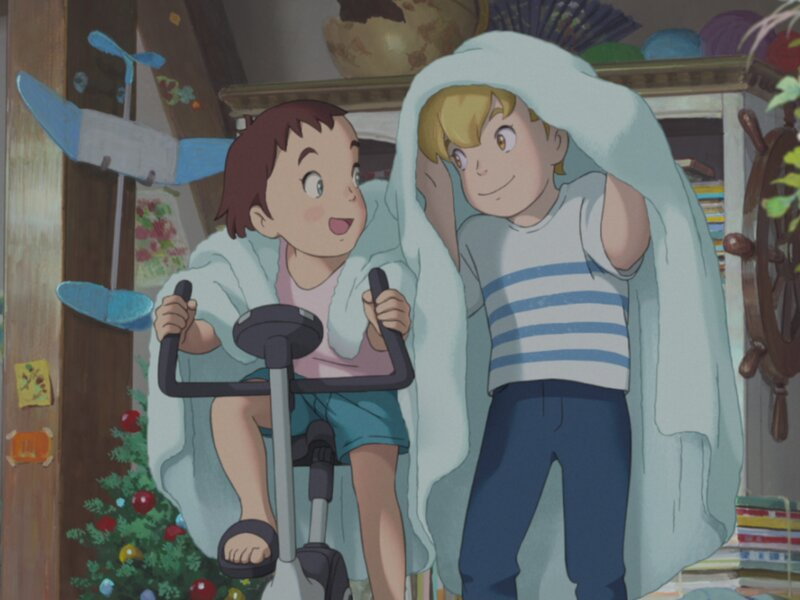
List of work and production they have animated/directed

-
1984 Lensman (Animator)
-
1987 Twilight of the Cockroaches (Animator)
-
1987 Foxes of Chironupp Island (Animator)
-
1988 Grave of the Fireflies (Assistant Layout and Animation Director)
-
1990 The Story of Perrine (Animation Director)
-
1991 Only Yesterday (Scene Design / Storyboard)
-
1992 Porco Rosso (Animator)
-
1994 Pom Poko (Image Building, Screen Composition)
-
1995 On Your Mark (Animator)
-
1995 Whisper of the Heart (Animator)
-
1997 Princess Mononoke (CG Production)
-
1999 My Neighbors the Yamadas (Storyboard, Scene Composition, Animation Director)
-
2001 Spirited Away Original picture
-
2002 Ghiblies Episode 2 (Screenplay, Director)
-
2006 Portable Airport (Screenplay, Director)
-
2006 Tales from Earthsea (Animator)
-
2014 The Tale of the Princess Kaguya (Scene Design)
-
2018 Modest Heroes (Screenplay, Director)
-
2019 Ni no Kuni (Animation Director)
-
2023 The Imaginary (Director)
Who they are and what they have accomplished?
Born on November 29, 1953, in Tokyo, Japan. During his subcontracting years at Studio Neo Media and A Pro, Momose worked on TV titles such as Tensai Bakabon (1971-1972), Dokonjo Gaeru (1972-1974), and Hajime Ningen Gyatorus (1974-1976) (scenes from which are featured in the NTV documentary A Ghibli Artisan - Kazuo Oga Exhibition.After Momose was recruited by Ghibli to do layout and other duties on Grave of the Fireflies, he continued with the studio as supervisor of key animation on Only Yesterday and Pom Poko. After doing key animation on Porco Rosso, Whisper of the Heart, and Spirited Away, and CG work on Princess Mononoke, Momose returned to working with Takahata on My Neighbors the Yamadas where he worked alongside Osamu Tanabe doing storyboards, setting scenes, and directing the animation.

Where the practitioner has worked and what games they have worked on?
Momose was recruited by Studio Ghibli in 1988 to provide layout and other duties for Grave of the Fireflies. He later provided key animations for Porco Rosso, Whisper of the Heart, and Spirited Away. In 2004, Momose made his directorial debut on two short films, Portable Airport and Space Station No. 9. In 2005, while continuing to work at Ghibli, Momose formed his own studio, Studio Kajino. In 2010, Momose served as a character designer, cut-scene animation director and storyboard for Ni no Kuni: Dominion of the Dark Djinn, which was released on Nintendo DS. The enhanced version of the game was released a year later on PlayStation 3, titled Ni no Kuni: Wrath of the White Witch. Momose later character designed the game's sequel, Ni no Kuni II: Revenant Kingdom. In 2019, Momose directed NiNoKuni at OLM, Inc. In 2021, it was announced that Momose will direct a film adaptation of A.F. Harrold's novel The Imaginary at Studio Ponoc. It premiered on December 15, 2023.


How did they gained entry to the industry?
Yoshiyuki Momose's animation techniques involve a blend of traditional hand-drawn methods with innovative digital tools, particularly in creating realistic and emotionally resonant visuals. For his 2023 film The Imaginary, Momose developed a new technique for applying light and shadow, which adds realism and emotional depth to the characters and the environments they inhabit ; which he calls the 'light and shadow technique'. Momose also pioneered a "light and shadow" animation technique, seen in his movie 'The Imaginary', to add depth and realism to animated characters and settings. Another technique he uses is nuanced acting, this is done by Momose emphasizing details on storyboards to convey nuanced acting, ensuring subtle character expressions and movements are laid out. This is why the animation always feels to human.


Common workflows, processes and tasks the practitioner performs on a regular basis
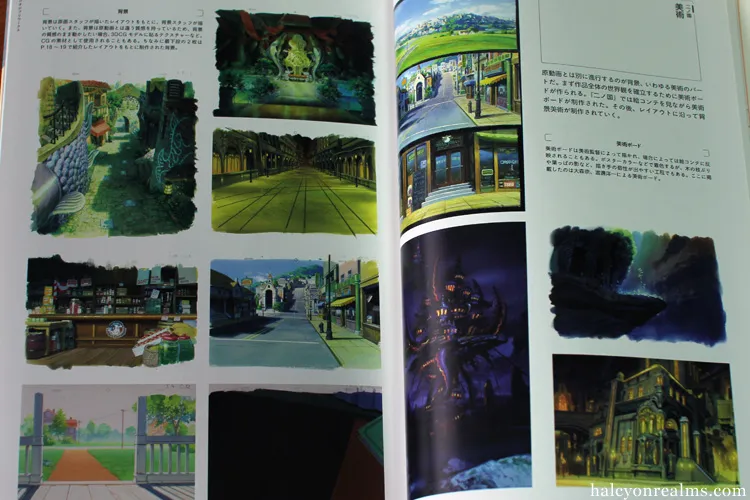
After Momose was recruited by Ghibli to do layout and other duties on Grave of the Fireflies, he continued with the studio as supervisor of key animation on Only Yesterday and Pom Poko. After doing key animation on Porco Rosso, Whisper of the Heart, and Spirited Away, and CG work on Princess Mononoke, Momose returned to working with Takahata on My Neighbors the Yamadas where he worked alongside Osamu Tanabe doing storyboards, setting scenes, and directing the animation (Momose handled these duties for the first half of that film, Tanabe did the honors for the second half).Yoshiyuki Momose's art process involves a blend of traditional hand-drawn techniques, realistic observation, and the strategic use of digital technology. He creates detailed storyboards, often with a dynamic and frantic style, that serve as the foundation for his work, sometimes prioritizing realism and at other times focusing on special effects and computer-generated imagery to control pacing.


How their work contributes to the success of a game/movie?
Momose is considered an "unsung hero" who, through his technical mastery, contributed significantly to the visual impact of Takahata's films. His work helped to expand Studio Ghibli's artistic and technical range, moving beyond traditional animation to incorporate new technologies and experimental styles. Yoshiyuki Momose mainly helped Studio Ghibli by establishing Isao Takahata's realist style through his work on layouts, storyboards, and animation for films like Grave of the Fireflies and Only Yesterday. Another reason he was so vital for 'Studio Ghibli' was do to his past film experience as he created several short films, including 'Ghiblies Episode 2', which blended different animation styles to create distinct tones. He also directed commercials and music videos, helping to push the studio's creative boundaries.


How their work meets and improves industry standard
Due to their past work advertising and creating the main storyboards and animation stills in the most memorable and beloved 'Studio Ghibli' movies they have proven to be not only a talented artiest but director, due to this support and skill he was able to open his own animation studio 'Studio Ponoc' and create the following movies 'The Imaginary' and 'Tomorrow Leaves'. Both movies directed by Yoishiyuki Momose share the same breathtaking art work of the flowing animation, memorable backgrounds, story and designs and the over ability to make the viewer feel raw emotion from it's human like visuals and body language.
Yoishiyuki Momose has worked on many 'Studio Ghibli' films such as, 'My neighbors the Yamadas' , 'Portable Airport' and the main movie I will talk about 'Spirited Away'. Yoishiyuki Momose had worked on the main story boards and base animation for this movie and without his help the movies storytelling thought body language and emotion wouldn't be as strong. For example, when Haku finds out his real name the animation used in that scene makes the moment feel more of an impact as the the slow flowing animation of this hair and both characters falling give the aspect of time freezing fro this important reveal.
The main thing I want to take away from researching this 2D practitioner is the way Yoishiyuki Momose creates storyboards and artwork that convey powerful emotion and clear visual storytelling with just simple things such as poses and facial expressions. I want to research and practice my stenting and storyboarding skills in the style of this artist due to their clear and stunning work that helped the animators and other artists base their final works off of and help these movies from 'Studio Ghibli' become the animated legends they are in the film world. By learning these skills, I can improve my concept and sketch art before starting an art piece and convey a strong message with just body language and range of emotion.

-3D- Practitioners
Andrea Savchenko
List of work and production they have animated/directed



Fortnite:
The main game she has worked on besides her own personal art works and projects is Fortnite. She has made 2D character designs and sketches for other games but when she went into a 3D medium she was hired by 'Epic Games' and worked as a character designer and modeler for Fortnite. She has been working on Fortnite since it's release and still work there till this day.
Who they are and what they have accomplished?
Andrea Savchenko is a Character Artist at Epic Games. Andrea started out with a traditional art background, who took on the field of real-time 3D art for games because she wanted to explore 3D mediums.When she was introduced to 3D art by an engineer who recognised she had the talent and technical appetite to create amazing things. Since then she has developed her skills to be able to create realist and or stylized characters for games such as Fortnite. To quote from her own reasoning why she was become a 3D artiest "I chose to work in games because I believe the interactive medium of play is the most powerful and welcoming influence on our kids today and people of future generations."After doing more research, she learned that [Think Tank Training Centre] school invested in the most updated tools, updated curriculum taught by pros that work in industry, and the student work coming out of this school she thought was brilliant.

Where the practitioner has worked and what games they have worked on?
She didn't learn 3D modeling until she started her art career a quote from an interview states 'If you are just starting out and know nothing about 3D, 'I am a strong believer in the value of a well-organised curriculum taught by industry pros that can accelerate your learning, and give you a holistic understanding of the world of 3D art and what tools and techniques are used today. Sure, you can fish for YouTube videos to learn tidbits here and there but it’s hard to know what to search for when you don’t know what exists. You may be sculpting characters in Zbrush without any background in anatomy. You may only know how to bake in xNormal or Painter without ever discovering the baking tools Marmoset has to offer.' Once she did she created her own personal 3D projects such as the Alice in wonder land themed one. Once Epic hired her for her portfolio she began to work as a concept artist for Fortnite then became a 3D modeler once she learned how to use 3D.


How did they gained entry to the industry?
Andrea states the main art piece that got her into 'Epic Games' was her "“We’re All Mad Here” in 3D, a couple of other studios even reached out to work with her. She learned 3D modeling from the 'Academy of Arts University' doing a Master’s in Game Development, with an emphasis on Characters. However, though she says her instructors were great, the curriculum wasn't for her. She then found the platform 'Think Tank' through the Facebook group called “10K/Hours”, where the plethora of art posted by 'Think Tank' students caught her attention. After she did some more research, she learned this school invested in the most updated tools, updated curriculum taught by pros that work in industry, and the student work coming out of this school was brilliant. Due to her skill level and love for creating characters Epic put her on the Fortnite team as a character designer and rigger.


Common workflows, processes and tasks the practitioner performs on a regular basis
Andrea normally posts her progress photos on her Artstation on example is her biker girl model she made , she shows how she created her from start to finish. She begins in 'Maya' bu sculpting her base character design and using tris to be able to make not only the UV map fit the character without flaw but to make rigging and animation the model easier and more realistic. After doing that she then sculpts in texture and detail such as pours and cuts on her face and hand, and fabric / hair textures to make the grey model look high quality ready for a texture paint. She then moves onto texture painting her model trying to make it look as realistic as possible , as you can see on her range on creating different cloth types such as, leather and cotton. Lastly, she then creates a rig fro the character model to be able to create a simple smoking animation, she uses 'Maya's' animation tools to create smooth movement.


How their work contributes to the success of a game/movie?
After working for Epic and Fortnite as a concept artiest then came back to be a character modeler, she has recently been promoted to be a lead character artiest for all of Fortnite's skins. She has made skins such as 'Winston' in both the 2D character art and the 3D rig and model for him, she exaggerates his cartoon like nature by having him have a lanky and rubber hose like body and movement with a pair of expressive simple eyes to share a comedic tint of emotion on him making him stand out to other characters. She captures the aesthetic of a wolf with cartoon like physics and expressions perfectly as his model in game feels wobbly and exaggerated without making him to broken for the game or stand out to much from the other skins. This helps improve the games overall experience by having interesting characters as Fortnite is a free games, however if you want to customize your character you pay money ; by having unique characters the player is more likely to spend money.


How their work meets and improves industry standard
This video is meant to showcase the production value of Andrea's company that she works for but also demonstrates the style of work she does for Fortnite and other possible 'Epic' games. This trailer for Fortnite's new season for Halloween shows not only the future renders and models of the new cosmetic skins but it also demonstrates Fortnite's cartoony style with its stretch and squish animation that both correlates into Andrea's work of other cartoon-like characters in Fortnite she has made. This video shows how important her job is in the gaming industry as she is part of a company that is known worldwide and is able to a point to be able to model 3D renders of famous IPs in her main game. Andrea's animation, rigging and modeling as pushed Fortnites identity from the start making feet like this possible and the game wouldn't be as recognizable without her.
This short video presents her character 'Wendell' that she designed, modeled, and rigged for the game Fortnite as a cosmetic skin animated in an old school Carrington style with exaggeration, body language, and extreme proportion shifts to present a story and explore who he is as a character.Andrea's character design emulates old time wolf designs such as the coyote for 'wile e coyote' show yet aspects such as his closed body language and soft fur silhouette share the picture that he's a gentle giant without needing dialogue. On the animation side she has rigged him to be able to exaggerate his body to make more comedic moments in this short and help show off his personality well in under 4 minutes; her work on Fortnite characters help give the game its style and unique flare making her a key artist to the team.
Something I have noted while researching Andrea Savchenko is their clear process in documenting every step of their artwork, showing the sketching stage to the tripology stage to the final render. Andrea's skill in 3D is very advanced and I want to implement their use of workflow to base my future 3D projects on as I find her way of organising and then presenting her work in both her portfolio and official work will help me not only improve in documenting skills of my process and a baseline on what to work on first with my 3D renders and artwork. I want to research into how to make my own 3D models in both 'Blender' and 'Maya' for any future project in 3D, and I will look back on my research on this practitioner to be able to make my models as best as they can be.

Programming Practitioners
Carol Shaw
List of work and production they have created/directed


Atari 2600 :
-
3-D Tic-Tac-Toe (Atari, 1978)
-
Othello (Atari, 1978) with Ed Logg
-
Video Checkers (Atari, 1980)
-
Super Breakout (Atari, 1981) with Nick Turner
-
River Raid (Activision, 1982)
Intellivision :
-
Happy Trails (Activision, 1983)
Atari 8-bit computers :
-
Atari BASIC (Atari, 1979-1981) (technical writing)
-
Atari Calculator (Atari, 1979-1981)
-
River Raid (Activision, 1983) port from 2600 to Atari 8-bit and 5200
Unreleased :
-
Polo, Atari 2600 (Atari, 1978)
-
She would also do small projects for other games such as play-testing, concept making and code correction/improvements.
Who they are and what they have accomplished?
Shaw was born in 1955 and was raised in Palo Alto, California. Her father was a mechanical engineer and worked at the Stanford Linear Accelerator Center. In a 2011 interview, she said she did not like playing with dolls as a child but learned about model railroading from playing with her brother's set, a hobby she continued until college. She also stated that she was gifted in mathematics throughout her childhood. Shaw first used a computer in high school and discovered she could play text-based games on the system. Shaw attended the University of California, Berkeley and graduated with a BS in Electrical Engineering and Computer Science in 1977. She later completed a master's degree in computer science at Berkeley. Immediately after earning her Master's degree in 1978, Shaw was hired at Atari, Inc. to work on games for the Atari VCS (later called the 2600) with the title of Microprocessor Software Engineer.

Where the practitioner has worked and what games they have worked on?
Her first project was Polo, a promotional tie-in for the Ralph Lauren cologne. The game reached the prototype stage, but Atari chose not to publish it. Shaw's first published game was 3D Tic-Tac-Toe for the Atari 2600 in 1978 ; she also wrote Video Checkers (1980) and collaborated on two titles: a port of the coin-op game Super Breakout with Nick Turner and Othello with Ed Logg (1981). Co-worker Mike Albaugh later put her on a list of Atari's "less publicized superstars". Shaw left Atari in 1980 to work for Tandem Computers as an assembly language programmer, then joining Activision in 1982. Carol Shaw's works at Activision includes designing the bestselling game River Raid (1982) for the Atari 2600, a vertically scrolling shooter. She was the first professional female game designer and programmer at Activision and also created ports of River Raid for other systems like the Atari 5200 and Commodore 64.


How did they gained entry to the industry?
Carol Shaw entered the video game industry by leveraging her background in computer science and electrical engineering, earning a master's degree and then being hired by Atari as a microprocessor software engineer in 1978. She was recruited by the company shortly after graduation, starting her career at Atari where she programmed games for the Atari 2600 console and quickly became known for her programming expertise. She became one of the first professional female video game developers when she joined Atari after graduating 1978. in 1980, Shaw's “Tic-Tac-Toe” became the first commercially released video game designed by a woman. She developed a scrolling format for her second game, “River Raid,” while working at Activision. She quickly developed a reputation as an exceptional programmer, particularly for her ability to maximize the power of the Atari 2600's processor, and was a "go-to" for difficult programming tasks.

Common workflows, processes and tasks the practitioner performs on a regular basis
Common workflows for Carol Shaw involved designing and developing games like River Raid, including creating the game's scrolling format and performing advanced mathematical calculations. She designed the game to use procedural generation to create endless levels, a technique necessary due to the limited cartridge memory. Inspired by other scrolling games, she chose a vertical scrolling format, drawing levels on graph paper and then creating the game on the console. She would sketch game designs, often on graph paper, before translating them into code. This is an example of her hands-on approach to development.he used complex mathematics to create core game mechanics. For example, she used mathematical calculations for ball and horse motion in Polo, and for the artificial intelligence in 3-D Tic-Tac-Toe.
How their work contributes to the success of a game/platform?
Carol Shaw's work contributed to game success through technical innovation, such as creating the procedurally generated river in River Raid, and through accessible design that made complex gameplay easy to grasp. Her technical skills pushed the limits of the Atari 2600, creating detailed graphics and smooth scrolling, while her design choices ensured games were both deep enough for multiple replays and simple enough for a wide audience. Her most famous work, River Raid, achieved platinum sales for surpassing one million units and is still considered a classic. Due to her work creating games for the 'Atari' the console sold very well -especially in a time were video games where of a new concept- without her the console may of failed and we might not have the iconic game we have in both today's age and in the 90's age.

How their work meets and improves industry standard
This video is documenting 'Carol Shaw's' life in the gaming industry and how she was the first female game developer and how she created her games for the 'Atari'. Due to her work creating games such as: '3D Tic-Tac-Toe, River Raid, and was the leader for the majority of 'Atari's' games until she left. This video explains how she rose up the ranks and became the first woman to be recognised in the gaming field by her coding in games such as: River Raids, and 3D -Tic-Tac-Toe. From what this video tells me is that she was extremely important to the gaming community, especially as a woman in a new industy ; her skills were the main reason the console did well, and she is a historical figure in games, even getting awards for her achievements.
This video demonstrates how the game for the 'Atari' '3D Tic - Tac - Toe' and how it plays on the console; it shows the main gameplay aspects that were extremely revolutionary for the time and the console. The ability to make models look 3D in games that are meant to emulate only 2D graphics, this game changed the gaming sphere as a whole as it was now known that you could code 3D graphics on consoles. This helped the 'Atari' sell as it was one of the few consoles that figured out this code making it very successful due to 'Carol's' coding and game making.Without these games and other games she has made, the 'Atari' might not have been a success without her games, making her a historical figure in gaming.
I have been researching 'Carol's' work in gaming and how much she was a figure in console games and her pioneering career at companies like 'Atari' and 'Activision' helped pave the way for future women in the industry, and her contributions have been widely recognized through honors such as induction into the Academy of Interactive Arts and Sciences Hall of Fame. The main games she has created are 'River Raids and 3D Tic-Tac-Toe , which helped the 'Atari' succeed in sales and become staples in the first gen games history. By learning how she rose up the ranks and became a leader and mentor in the programming field, I can use how she persevered as a mental resource on how I should persist and present my ideas with confidence as they can become used one day in the right field.

Level Design Practitioners
Malin Wong
List of work and production they have created/directed


Black Rose: (2019)
Level layout / level designer / overall design
Summit: (2019)
UI/Ux designer/ level designer / game designer
Junkyard Bash: (2018)
technical designer / level designer
Other unnamed games:
FutureGames / Avalanche Studios
Who they are and what they have accomplished?
Malin Wong is a level designer / overall level creator (UI maker, Game organisation and team leader) ; her role is “Experienced Level Designer”. In level design, she is part of the world-building of her studio and games, sometimes from pitch to feature complete. As a level designer, she is responsible for building interesting locations in our their-house editor that make the player utilise their game mechanics in an optimal way. Malin Wong has created a portfolio with projects including level designs made in Unreal Engine, such as "The Forest," "The Valley," and "Delirium". After graduating from FutureGames, she has worked on projects like Ravenbound and is known for creating engaging and playable environments. She has a background in game design and also shows interest in the intersection of level design with user experience and visual communication.

Where the practitioner has worked and what games they have worked on?
Malin Wong, after her education, was hired as a UI/level design manager for smaller games. She has worked on some past games in the past before working on the horror game 'Black Rose' before working full time and still working at the games stuidio 'Avalanche Software'.Avalanche Software is a video game developer known for the recent Hogwarts Legacy and the Disney Infinity series, but it has also developed many other games, including movie tie-in titles like Toy Story 3 and Cars 3: Driven to Win, as well as older games such as Mortal Kombat titles and the Tak series. The studio was acquired by Disney in 2005, went dormant after the shutdown of Disney Interactive Studios in 2016, and was revived by Warner Bros. Interactive Entertainment in 2017.She has worked on games such as: 'Junkyard Bash', 'Summit', and other backgrounds and level layouts general to 'Avalanche Software's' games.


How did they gained entry to the industry?
Her first big break was getting accepted into Futuregames, as the admission intake was difficult, being one of the best game development schools in the area. She had taken a random programming class in her high school, where she had studied media, but other than that she had no previous experience with game development. She studied a lot, watched a lot of Brackeys, and in the end she just did her best for the admission test. When interviewing, she was open and honest, especially around the fact that she did not know everything. During her education she was exposed to other disciplines for the first time, and they had a couple of cross-discipline game projects that were vital in terms of learning how to work together for a common product. They learned a lot from each other, and the game projects were like crash courses in game development, from pitch to “release”, but of course with a much smaller scope. The main game she worked on in that time was 'Junkyard Bash'.


Common workflows, processes and tasks the practitioner performs on a regular basis
Her workflow usually starts with syncing with any potential stakeholders, making a plan for whatever she is going to build, and communicating with her lead and producers. she likes to have a clear vision of what she is trying to achieve beforehand, whether it’s writing documentation or making paper designs, before she moves on to prototyping and blocking out levels in the engine. As a Level Designer she is constantly utilising all the amazing work from the other disciplines in her team, so it’s important that she has a form of communication with everyone in her development group. From some images of her workflow I can see she uses clear labeling on where the flow of the level is meant to be and the key points of the level to help both coders and artists layout their work around this list. Due to her skills and organisation she can make development quicker since her work is so easy to read and use to create work.

How their work contributes to the success of a game/platform?
As Mailin Wong is a Level Designer's role is to keep the player focused on moving through the game and achieving their goal or mission while reducing the potential for confusion. Her main goals in level desing were given her a wide range of tasks and roles to help her experience how a game is made. She had a go at activities in most of the departments to get a feel for what they do. She helped with a lot of things, such as giving suggestions for the narrative board, sketching layouts for some of the levels that needed adjusting, learning about production workflows, testing game audio and character dialogue, and analysing existing games. This was curtail to the games she worked on as without having a level design to map out the main flow of the game's end goals or criteria, the main layout of the game's map and world couldn't function properly.

How their work meets and improves industry standard
This video shows gameplay and the level design of the game 'Jumkyard Bash,' a game that Malin Wong worked on at the company 'Futuregames'.Junkyard Bash is a physics-based racing game for 1-4 players where characters race on scrappy tracks in a sci-fi junkyard, trying to knock opponents off the course to be the first to finish. It was a two-week project by Futuregames. Malin worked on the main level designs and flow of the map making sure they are both functional and enjoyable. By doing this, the game succeeds as the racing maps are the most important part of the game, as by having bland, broken and forgetable tracks will make a racing game fail.
This video shows gameplay of the indie game 'The Black Rose' ; ''The Black Rose' is a first person, psychological horror experience. The player is invited out on a date to the Black Rose bar, however once inside they soon discover that something is terribly wrong. Malin worked on the bars layout and other sections such as UI and story planning to make sure each scene feels unnerving and isolated when needed. Without her work in creating the baseline layout and design of the games bar and other sections of the game, plus the accompanying UI, the horror aspect wouldn't be as strong and the game's atmosphere would fall flat.
After researching about Malin Wong I have learned that when planning out my story in my games I need to also plan the overall flow of the game and how the pace will progress to make sure that my game feels paced correctly and not rushed and or drawn out. I can do this by mapping out key points in my story and mapping out the events that lead up to it and lead to the next point; by also mapping out my world's level by using floor plans and my knowledge of level design I can make sure my map feels concise and not confusing to the player. I will use Mailn's techniques of mapping out my story and level layout to create a correct game in both visuals, playing, and story, and I will also use the positive mindset to help me feel motivated in my work.